
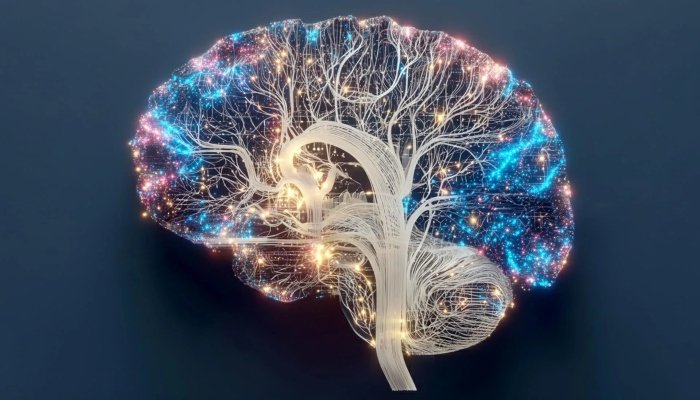
Scientists have discovered the brain's surprising response to sleep deprivation
Scientists have discovered the brain's surprising response to sleep deprivation
It is known to almost everyone that after a bad night's sleep, it is difficult to concentrate, attention wanders during work, reaction time slows down and it becomes difficult to think correctly.
But at that time, the brain does something amazing that scientists have now learned.
A study by the Massachusetts Institute of Technology in the United States looked at what happens inside the brain when mental focus is affected after poor sleep. The study found that when a fluid is activated, the ability to concentrate fails for a few moments.
Cerebrospinal fluid (CSF) is a brain process that occurs during sleep and cleans the waste that accumulates in the brain throughout the day.
This brain cleaning activity is considered important for keeping the brain healthy.
But this study found that when a person is sleep deprived, our body activates the movement of this fluid during wakefulness to compensate for it. But this process greatly reduces attention.
The researchers said that when you are sleep deprived, the CSF process starts to occur during wakefulness and when this fluid flows, the ability to concentrate cannot work at these moments.
The same research team had first discovered in a study in 2019 that this fluid works by moving in the brain during sleep and cleaning it.
After these results, they tried to find out what happens to this fluid system when a person is sleep deprived. For this purpose, they recruited 26 volunteers and tested them twice.
The tests were conducted once in the laboratory after sleep deprivation, while the second time was conducted when they had finished sleeping.
The next morning, these people were asked to complete various tasks to test their brain functions, especially their ability to concentrate. The researchers discovered that this fluid is activated during wakefulness when they are sleep deprived and starts cleaning the brain.
They said that in this way, we think the brain tries to compensate for the lack of sleep.
The results of this study were published in the journal Nature Neuroscience.
It is known to almost everyone that after a bad night's sleep, it is difficult to concentrate, attention wanders during work, reaction time slows down and it becomes difficult to think correctly.
But at that time, the brain does something amazing that scientists have now learned.
A study by the Massachusetts Institute of Technology in the United States looked at what happens inside the brain when mental focus is affected after poor sleep. The study found that when a fluid is activated, the ability to concentrate fails for a few moments.
Cerebrospinal fluid (CSF) is a brain process that occurs during sleep and cleans the waste that accumulates in the brain throughout the day.
This brain cleaning activity is considered important for keeping the brain healthy.
But this study found that when a person is sleep deprived, our body activates the movement of this fluid during wakefulness to compensate for it. But this process greatly reduces attention.
The researchers said that when you are sleep deprived, the CSF process starts to occur during wakefulness and when this fluid flows, the ability to concentrate cannot work at these moments.
The same research team had first discovered in a study in 2019 that this fluid works by moving in the brain during sleep and cleaning it.
After these results, they tried to find out what happens to this fluid system when a person is sleep deprived. For this purpose, they recruited 26 volunteers and tested them twice.
The tests were conducted once in the laboratory after sleep deprivation, while the second time was conducted when they had finished sleeping.
The next morning, these people were asked to complete various tasks to test their brain functions, especially their ability to concentrate. The researchers discovered that this fluid is activated during wakefulness when they are sleep deprived and starts cleaning the brain.
They said that in this way, we think the brain tries to compensate for the lack of sleep.
The results of this study were published in the journal Nature Neuroscience.
Express your opinion:
More from Health

WHO: Millions of Cancer Cases Could Be Avoided With Lifestyle Changes

High Intake of Ultra-Processed Foods Linked to Increased Cancer Death Risk
“Brain Signals May Worsen Heart Attack Damage, Mouse Study Finds”

Thailand Screens 1,700 Travelers Amid India’s Nipah Virus Outbreak

India Confirms Two Nipah Cases, Says Situation Under Control

10 Effective Ways to Stay Healthy in Winter
💬 Leave a Comment
Popular
 Israeli Strike Kills Two Near Maghazi Camp Amid Ongoing Ceasefire Violations
 China, Finland Seek Closer Ties as Arctic and Global Alliances Shift
 I can't give my husband', why did Sana Javed give this answer to a user?
 Former Bangladeshi Prime Minister Khalda Zia has died at the age of 80
 Pakistan outperforms India in terms of economy and peace, Global Economic Survey
Latest
 UN Extends Taliban Sanctions Monitoring Mandate Amid Rising Security Concerns
 BNP Secures Historic Landslide in Bangladesh’s Landmark Parliamentary Election
 Bradford 2025 TV Coverage Reaches Over 26 Million Viewers
 T20 World Cup 2026 Pre-Match Controversy: Namibia Claims Disadvantage Against India
 “Text Promises £1,000 in 90 Minutes – Experts Warn of Hidden Money Laundering Risk”
Recent Comments
No comments yet. Be the first to comment!