
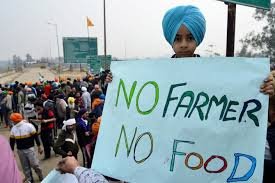
Farmers protest in India
BY Mian M Iftikhar ul hassan
It is a bitter truth that in India More than 300,000 farmers have killed themselves since the
1990s. According to the latest official figures Nearly 10,300 did so in 2019. Farmers and
their workers are also abandoning agriculture in droves — 2,000 of them every day
according to the last census in 2011. Now as an army of resolute Indian farmers keeps up
its blockade of New Delhi, Prime Minister Narendra Modi faces potentially the trickiest
challenge yet to his authority and reform agenda. With the passage of time the protest
getting worse and until now 25 farmers have lost their lives, critics are looking at the
background to new farm laws, why they are sparking such opposition and Modi’s limited
options. The first question is that what is the state of Indian agriculture? India’s farming
sector is vast and troubled. It provides a livelihood to nearly 70 percent of the country’s 1.3
billion people and accounts for around 15 percent of the $2.7-trillion economy. The “Green
Revolution” of the 1970s turned India from a country facing regular food shortages into one
with a surplus — and a major exporter. But for the past few decades, farm incomes have
remained largely stagnant and the sector is in sore need of investment and modernization.
More than 85 percent of farmers have less than two hectares (five acres) of land. Fewer
than one in a hundred farmers own over 10 hectares, according to a 2015-16 agriculture
ministry survey. India hands out an estimated $32 billion in subsidies to farmers annually,
according to the finance ministry. Water shortages, floods and increasingly erratic weather
caused by climate change, as well as debt, have taken a heavy toll on farmers. According to
a Punjab government report in 2017, the northern state will use up all its groundwater
resources by 2039. Indian governments have long made big promises to farmers — a
crucial vote bank — and Modi is no exception, vowing to double their incomes by 2022.
In September, parliament passed three laws that enabled farmers to sell to any buyer they
chose, rather than to commission agents at state-controlled markets. These markets were
set up in the 1950s to stop the exploitation of farmers and pay a minimum support price
(MSP) for certain produce. The system has led to farmers sometimes growing crops
unsuited to the local climate, such as thirsty rice in Punjab, and can be fertile ground for
corruption.
But many farmers see the MSP as a vital safety net, and fear being unable to compete with
large farms and being paid low prices by big corporations. “The laws will harm the farmers
and in turn destroy our livelihood,” said Sukhwinder Singh, a farm worker who cycled 400
kilometers (250 miles) to the protests. He further said that “Land, cattle and farmers will be
enslaved by rich people. This government wants to finish us,”
Modi has drawn fire before — a disastrous withdrawal of large banknotes in 2016, for
example — but his popularity has held up, winning a landslide re-election in 2019.
From late 2019, there were months of protests against a citizenship law imposed by Modi’s
Hindu-nationalist BJP government that was seen as discriminatory to Muslims.
But the BJP, with its clout in traditional and social media, was able to depict the
demonstrators as “anti-nationals” before Covid-19 eventually snuffed out the protests.
Modi has tried to brush off the current agitation as being stoked by an opportunistic
opposition “misleading” the farmers. Some in his party have upped the ante by branding the
protesters — many of whom are Sikhs — as “hooligans, Sikh separatists and anti-
nationals”.
But with the farmers, it is different. They enjoy widespread support among Indians and
ignoring those clashes with Modi’s self-styled image as a champion of the poor.
In rural areas, where 70 percent of Indians live, there is already a growing perception that
Modi is cosy with big business and billionaire industrialists such as Mukesh Ambani, Asia’s
richest person. According to Arati Jerath, a political analyst there are many things which are
outdated in the agriculture sector. But reforms cannot be pushed like this. It is reality that
farmers protest in India has become a big challenge for Modi Government. The rulers of
many world has also reacted and shown full sympathy with Indian Farmers.
It is a bitter truth that in India More than 300,000 farmers have killed themselves since the
1990s. According to the latest official figures Nearly 10,300 did so in 2019. Farmers and
their workers are also abandoning agriculture in droves — 2,000 of them every day
according to the last census in 2011. Now as an army of resolute Indian farmers keeps up
its blockade of New Delhi, Prime Minister Narendra Modi faces potentially the trickiest
challenge yet to his authority and reform agenda. With the passage of time the protest
getting worse and until now 25 farmers have lost their lives, critics are looking at the
background to new farm laws, why they are sparking such opposition and Modi’s limited
options. The first question is that what is the state of Indian agriculture? India’s farming
sector is vast and troubled. It provides a livelihood to nearly 70 percent of the country’s 1.3
billion people and accounts for around 15 percent of the $2.7-trillion economy. The “Green
Revolution” of the 1970s turned India from a country facing regular food shortages into one
with a surplus — and a major exporter. But for the past few decades, farm incomes have
remained largely stagnant and the sector is in sore need of investment and modernization.
More than 85 percent of farmers have less than two hectares (five acres) of land. Fewer
than one in a hundred farmers own over 10 hectares, according to a 2015-16 agriculture
ministry survey. India hands out an estimated $32 billion in subsidies to farmers annually,
according to the finance ministry. Water shortages, floods and increasingly erratic weather
caused by climate change, as well as debt, have taken a heavy toll on farmers. According to
a Punjab government report in 2017, the northern state will use up all its groundwater
resources by 2039. Indian governments have long made big promises to farmers — a
crucial vote bank — and Modi is no exception, vowing to double their incomes by 2022.
In September, parliament passed three laws that enabled farmers to sell to any buyer they
chose, rather than to commission agents at state-controlled markets. These markets were
set up in the 1950s to stop the exploitation of farmers and pay a minimum support price
(MSP) for certain produce. The system has led to farmers sometimes growing crops
unsuited to the local climate, such as thirsty rice in Punjab, and can be fertile ground for
corruption.
But many farmers see the MSP as a vital safety net, and fear being unable to compete with
large farms and being paid low prices by big corporations. “The laws will harm the farmers
and in turn destroy our livelihood,” said Sukhwinder Singh, a farm worker who cycled 400
kilometers (250 miles) to the protests. He further said that “Land, cattle and farmers will be
enslaved by rich people. This government wants to finish us,”
Modi has drawn fire before — a disastrous withdrawal of large banknotes in 2016, for
example — but his popularity has held up, winning a landslide re-election in 2019.
From late 2019, there were months of protests against a citizenship law imposed by Modi’s
Hindu-nationalist BJP government that was seen as discriminatory to Muslims.
But the BJP, with its clout in traditional and social media, was able to depict the
demonstrators as “anti-nationals” before Covid-19 eventually snuffed out the protests.
Modi has tried to brush off the current agitation as being stoked by an opportunistic
opposition “misleading” the farmers. Some in his party have upped the ante by branding the
protesters — many of whom are Sikhs — as “hooligans, Sikh separatists and anti-
nationals”.
But with the farmers, it is different. They enjoy widespread support among Indians and
ignoring those clashes with Modi’s self-styled image as a champion of the poor.
In rural areas, where 70 percent of Indians live, there is already a growing perception that
Modi is cosy with big business and billionaire industrialists such as Mukesh Ambani, Asia’s
richest person. According to Arati Jerath, a political analyst there are many things which are
outdated in the agriculture sector. But reforms cannot be pushed like this. It is reality that
farmers protest in India has become a big challenge for Modi Government. The rulers of
many world has also reacted and shown full sympathy with Indian Farmers.
Express your opinion:

💬 Leave a Comment
Popular
 Israeli Strike Kills Two Near Maghazi Camp Amid Ongoing Ceasefire Violations
 China, Finland Seek Closer Ties as Arctic and Global Alliances Shift
 I can't give my husband', why did Sana Javed give this answer to a user?
 Former Bangladeshi Prime Minister Khalda Zia has died at the age of 80
 Pakistan outperforms India in terms of economy and peace, Global Economic Survey
Latest
 UN Extends Taliban Sanctions Monitoring Mandate Amid Rising Security Concerns
 BNP Secures Historic Landslide in Bangladesh’s Landmark Parliamentary Election
 Bradford 2025 TV Coverage Reaches Over 26 Million Viewers
 T20 World Cup 2026 Pre-Match Controversy: Namibia Claims Disadvantage Against India
 “Text Promises £1,000 in 90 Minutes – Experts Warn of Hidden Money Laundering Risk”
Recent Comments
No comments yet. Be the first to comment!