
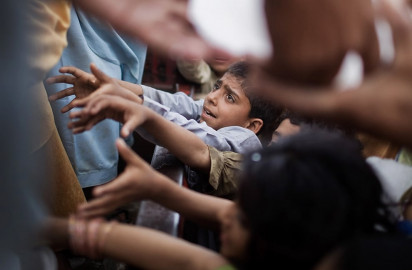
Despite Higher Funding, Rural Sindh Struggles for Clean Water, Toilets and Schools
KARACHI: A government-commissioned household survey has revealed that Punjab outperforms other provinces in education and health indicators, while Sindh and Balochistan continue to lag behind in access to basic services.
The findings are based on the Household Integrated Economic Survey (HIES) 2024–25, conducted by the Pakistan Bureau of Statistics. Carried out every five years, this was the first edition of the survey to be conducted digitally.
According to the survey, Pakistan’s overall literacy rate for individuals aged 10 years and above stands at 63 per cent. Punjab recorded the highest literacy rate at 68 per cent, followed by Sindh and Khyber-Pakhtunkhwa (K-P) at 58 per cent each. Balochistan reported the lowest literacy rate at 49 per cent.
The survey further revealed that Balochistan has the highest proportion of out-of-school children aged five to sixteen, at 45 per cent. Sindh follows with 39 per cent, while Khyber-Pakhtunkhwa recorded 28 per cent and Punjab 21 per cent.
Childhood immunisation coverage was also found to be highest in Punjab, where 79 per cent of children received complete vaccinations. In comparison, 69 per cent of children in Khyber-Pakhtunkhwa, 66 per cent in Sindh, and 54 per cent in Balochistan were fully immunised.
Nationally, the neonatal mortality rate was recorded at 35 per cent, while the infant mortality rate stood at 47 per cent, with rural areas accounting for a larger share of these deaths. The survey did not provide a provincial breakdown for mortality indicators.
Sindh emerged as the province with the highest proportion of households lacking toilet facilities, with 14 per cent of households reporting no access. This compares with 12 per cent in Balochistan, while only five per cent of households in Punjab and Khyber-Pakhtunkhwa lacked toilet facilities.
The survey also found that Sindh has the highest reliance on hand pumps for drinking water, particularly in rural areas. In Sindh, 34 per cent of residents use hand pumps and 14 per cent rely on motor pumps. In comparison, 20 per cent of rural residents in Punjab use hand pumps and 43 per cent use motor pumps, while figures for Khyber-Pakhtunkhwa stood at 12 per cent and 42 per cent, respectively. In Balochistan, eight per cent relied on hand pumps and 21 per cent on motor pumps.
Commenting on the findings, Taj Mari, President of the National Party in Sindh and a former ruling party leader in Balochistan, said the state of basic services in Sindh was unacceptable, particularly given the increased resources available to provinces after the 18th Constitutional Amendment.
He attributed the lack of progress in health, education and essential services to corruption and non-merit-based recruitment, noting that many government positions continue to be filled through political recommendations. Mari, who hails from the rural Sanghar district, was questioned on why rural Sindh remains heavily dependent on hand pumps for drinking water, a situation he said reflects long-standing governance failures.
More from Pakistan

Ramazan Moon Likely to Be Sighted on February 18, 2026
FCC Halts IHC Contempt Proceedings Against PM, Cabinet in Dr Aafia Case

Imaan Mazari, Husband Challenge 17-Year Conviction Over Social Media Posts

Islamabad Blast: Suicide Bomber’s Family Held as Authorities Launch Nationwide Crackdown

Funeral Prayers Offered in Islamabad for Victims of Tarlai Imambargah Attack as Death Toll Reaches 32
Imran Khan Health Concerns: PTI Approaches Supreme Court for 10th Time
💬 Leave a Comment
Popular
 Israeli Strike Kills Two Near Maghazi Camp Amid Ongoing Ceasefire Violations
 China, Finland Seek Closer Ties as Arctic and Global Alliances Shift
 I can't give my husband', why did Sana Javed give this answer to a user?
 Former Bangladeshi Prime Minister Khalda Zia has died at the age of 80
 Pakistan outperforms India in terms of economy and peace, Global Economic Survey
Latest
 UN Extends Taliban Sanctions Monitoring Mandate Amid Rising Security Concerns
 BNP Secures Historic Landslide in Bangladesh’s Landmark Parliamentary Election
 Bradford 2025 TV Coverage Reaches Over 26 Million Viewers
 T20 World Cup 2026 Pre-Match Controversy: Namibia Claims Disadvantage Against India
 “Text Promises £1,000 in 90 Minutes – Experts Warn of Hidden Money Laundering Risk”
Recent Comments
No comments yet. Be the first to comment!