
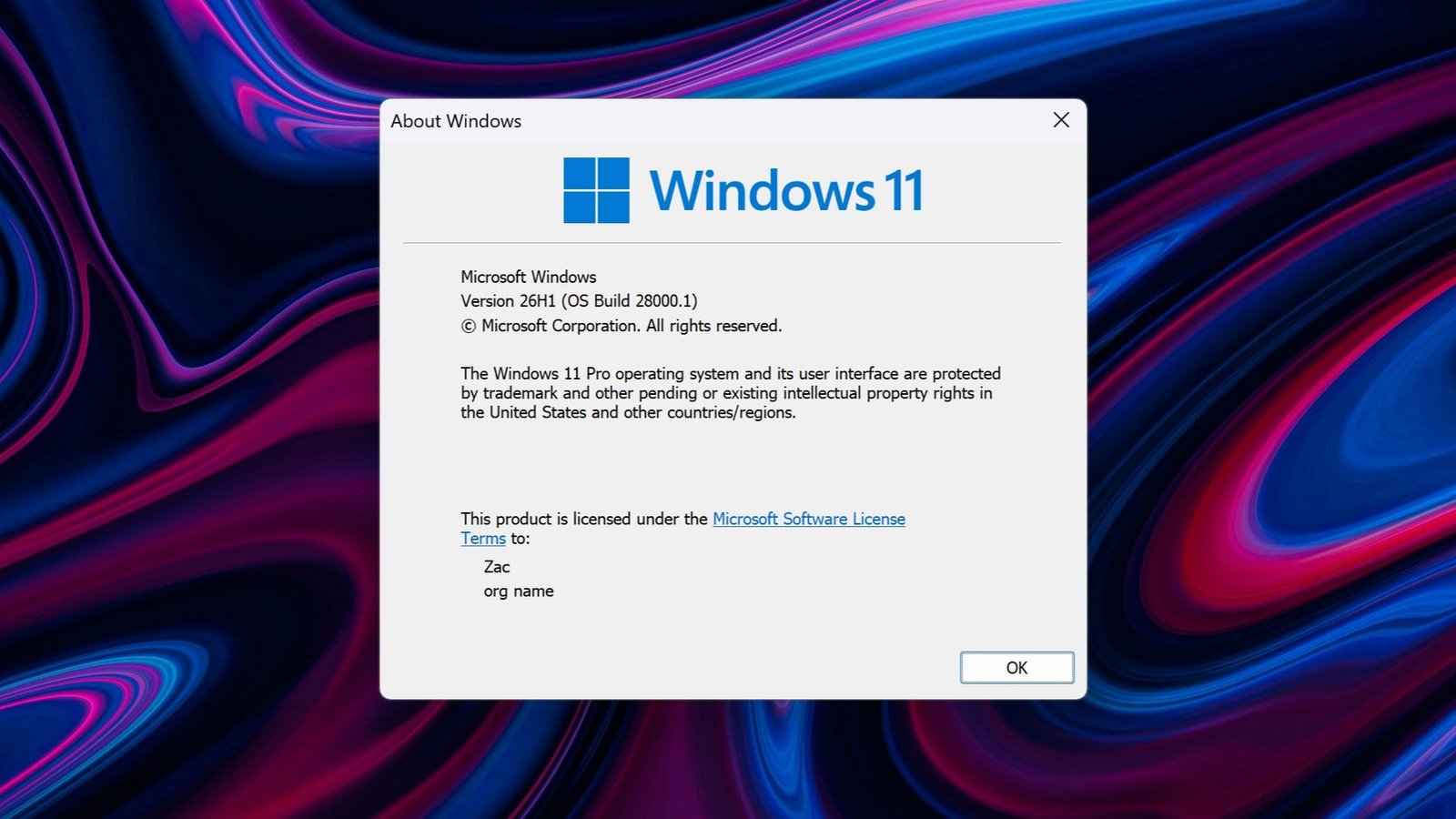
Windows 11 Version 26H1 Is Coming — But You Probably Won’t Get It
A “Feature Update” in Name Only
Since Windows 11 launched in 2021, Microsoft has stuck to a predictable rhythm: one major feature update per year, usually landing between late September and mid-October. That’s why we’ve seen releases like 22H2, 23H2, and 24H2 — all tied to the second half of the year.
Now, Windows Insiders are testing Windows 11 version 26H1, marking the first time a Windows 11 update appears in the first half of the year. But calling it a feature update is a stretch — and most users won’t receive it at all.
26H1 Is Only for New Hardware
Windows 11 version 26H1 won’t be offered to existing PCs. Instead, it’s designed exclusively for new devices, adding platform support for what Microsoft describes as “specific silicon.”
That silicon likely refers to Qualcomm’s upcoming Snapdragon X2 Arm-based processors, expected to launch soon. There’s also speculation around Nvidia’s rumored N1X Arm chipset, which could debut around the same time.
Why a Whole New Windows Version?
Releasing a dedicated Windows version just to support new processors may sound odd, but Microsoft has done something similar before. In 2024, laptops powered by the first Snapdragon X chips shipped with Windows 11 version 24H2 months before it reached existing PCs. That update included low-level optimizations needed to run properly on Arm hardware.
This time, the new generation of Arm processors is arriving earlier in the year, so Microsoft opted to label the release 26H1 instead.
No New Features This Time
Unlike 24H2, Windows 11 version 26H1 reportedly includes no new user-facing features at all. Its sole purpose is to enable support for the new silicon.
In contrast, 24H2 launched with hardware-dependent features like Copilot+, even though other changes arrived later. With 26H1, feature rollouts shouldn’t be affected for existing devices — meaning you’re not missing out.
AI Features May Still Be Coming
That doesn’t mean new machines won’t get exclusive capabilities. Qualcomm’s next-gen chips reportedly feature an NPU nearly twice as powerful as the previous generation. Microsoft will almost certainly want to take advantage of that extra AI horsepower — whether at launch or through later updates remains unclear.
The Normal Update Schedule Continues
Because 26H1 isn’t a true feature update, Microsoft’s regular release cadence stays intact. A full Windows 11 feature update is still expected in the second half of the year, complete with new features and improvements.
That said, expectations are tempered. Windows 11 version 25H2 added very little, and many meaningful changes now arrive through cumulative updates or app updates instead.
Support Still Matters
One important upside: each Windows 11 version is supported for three years, ensuring continued security and quality updates. Microsoft hasn’t confirmed whether 26H1 gets its own three-year support window or shares one with 25H2, but either way, upgrading to version 26H2 will likely be the recommended path for most users.
More from Technology

Google Pixel 10a Teased: A 15-Second Reveal That Leaves Plenty Unsaid

Oppo’s Next Flagship Could Go All-In on Cameras With Dual 200MP Sensors

Snow Moon Rises Tonight: A Winter Sky Spectacle

Concern Over Teen Safety and Data Use Sparks Social Media Ban Proposal in India
Microsoft Shifts Focus: Windows 11 to Get Major Tune-Up in 2026

, Challenging Musk’s Orbital Ambitions
💬 Leave a Comment
Popular
 Israeli Strike Kills Two Near Maghazi Camp Amid Ongoing Ceasefire Violations
 China, Finland Seek Closer Ties as Arctic and Global Alliances Shift
 I can't give my husband', why did Sana Javed give this answer to a user?
 Former Bangladeshi Prime Minister Khalda Zia has died at the age of 80
 Pakistan outperforms India in terms of economy and peace, Global Economic Survey
Latest
 UN Extends Taliban Sanctions Monitoring Mandate Amid Rising Security Concerns
 BNP Secures Historic Landslide in Bangladesh’s Landmark Parliamentary Election
 Bradford 2025 TV Coverage Reaches Over 26 Million Viewers
 T20 World Cup 2026 Pre-Match Controversy: Namibia Claims Disadvantage Against India
 “Text Promises £1,000 in 90 Minutes – Experts Warn of Hidden Money Laundering Risk”
Recent Comments
No comments yet. Be the first to comment!